For most Raleigh drivers, the annual vehicle inspection arrives like a small tax on your calendar. You need it done before you renew your registration, and a failed inspection means a trip for repairs and another trip back. The good news is that many of the most common reasons cars fail are simple, visible things you can check in about ten minutes, and the rest can usually be found by a technician before you ever go in. This guide explains what North Carolina inspections generally cover, the common reasons cars fail, how to do your own pre inspection check, what to do if your car fails and how a mobile mechanic can help you get ready. If you are searching for an NC car inspection in Raleigh, here is a practical overview.
What North Carolina Inspections Cover
According to the North Carolina Division of Motor Vehicles, vehicles registered in the state need an annual safety inspection before registration renewal, and vehicles registered in certain counties also need an emissions inspection at the same time. The safety inspection covers items such as:
- Headlights and other lights, including accessory lights and directional signals.
- Foot brake and parking brake.
- Steering.
- Tires.
- Horn.
- Rearview mirror.
- Windshield wipers.
- Exhaust system.
- Emission control components.
Rules, exemptions and the list of counties that require emissions testing are set by the state and can change, so check the NC DMV website or ask the inspection station for the current requirements for your vehicle and your county. This guide is general information, not an official statement of the rules. Raleigh area drivers should confirm whether an emissions inspection applies to their vehicle.
Common Reasons Cars Fail
Lights
Burned out bulbs are one of the easiest things to fix and one of the most common reasons for failure. Check the headlights on low and high beam, brake lights, turn signals, tail lights and any other lights the inspection covers. Do not forget the license plate light. Cloudy or yellowed headlight lenses can also reduce visibility, and a technician can advise on restoration or replacement.
Tires
- Tread depth. Worn tires can fail. Look at the wear bars in the grooves, or use a tread depth gauge, and ask the inspector or a technician what is acceptable.
- Damage. Bulges, cuts, exposed cords and cracks in the sidewall can fail a tire.
- Pressure. Make sure all tires are inflated to the recommended pressure on the door jamb sticker.
Brakes
Inspectors check how the brakes work, including the foot brake and the parking brake. Warning signs include a soft or sinking pedal, grinding, squealing, pulling to one side and a parking brake that does not hold. Brakes are a safety system, and repairs are best handled by a qualified technician. Do not keep driving normally if the pedal feels wrong.
Steering
Looseness, play, wandering or strange noises when turning can point to worn steering or suspension parts, and those can fail an inspection and are a safety concern.
Windshield wipers
Wipers that streak, skip or are torn can fail. Check the blades and the washer fluid. Replacing blades is quick and usually simple.
Horn and mirrors
Test the horn and look for a cracked or missing rearview mirror.
Exhaust
Loud exhaust, visible leaks, rust holes and loose or missing parts can cause problems. A loud rumble or a hissing sound from under the car deserves a look. Exhaust leaks can also let fumes into the cabin, which is a safety concern, so do not ignore them.
Emission control components and the check engine light
Where an emissions inspection applies, the car’s onboard computer is checked, and a lit check engine light can cause a failure. Missing or damaged emission parts, such as the catalytic converter or a gas cap that does not seal, can also be a problem. Fix the cause of a check engine light rather than only clearing the code, since the system often needs time to run its self tests before the car is ready. Ask a technician how that works for your vehicle.
A Ten Minute Pre Inspection Check
- Lights. With a helper or by reflecting off a wall or window, check headlights, high beams, brake lights, turn signals, hazards and tail lights.
- Tires. Check the pressure and look at the tread and sidewalls.
- Wipers. Test them with washer fluid and look at the rubber.
- Horn. Give it a quick press.
- Mirrors and glass. Look for cracks and damage.
- Brakes. Notice the pedal feel and any noises, and test the parking brake on a safe, gentle slope.
- Dashboard. Start the car and look for warning lights, especially the check engine light.
- Gas cap. Make sure it is present and tightens properly.
- Under the car. Look for obvious exhaust damage or hanging parts, and listen for unusual noise.
Do not try to repair anything involving the brakes or steering unless you know what you are doing. Your owner’s manual explains the warning lights and the bulb types for your vehicle.
Do a Little Maintenance Beforehand
A car in good general condition is more likely to pass, and it is a good time to catch small problems. If you are due for an oil change, you may want to handle it before the inspection, and our article on synthetic versus conventional oil helps you choose what your car needs. Follow the type and interval in your owner’s manual. The other fluids, belts and the battery are also worth a quick review. Raleigh’s growing traffic puts extra wear on brakes, tires and suspension, as our post on what Raleigh’s traffic boom means for car upkeep explains, which is one more reason to check the parts the inspection looks at.
What If Your Car Fails?
- Get the written report. It lists what failed and why.
- Ask questions. Make sure you understand which items need repair.
- Get a second opinion if you are unsure. A technician can confirm the problem.
- Have the repairs done. You can use any qualified shop or mobile mechanic.
- Return for a re inspection, following the rules and timing that apply. Ask the station for the details, since policies and time limits can change.
- If an emissions repair is complex, ask about any options or waivers the state may offer, and check the NC DMV for current information.
Avoid letting a failed inspection run past your registration due date without a plan. The DMV explains the consequences of missing the deadline, and the process is easier if you start early. The state allows the inspection to be done within a window before your registration expires, so you do not have to wait until the last week.
Tips to Pass the First Time
- Schedule early, and leave time for repairs if something fails.
- Fix the check engine light first if one is on.
- Replace worn wipers and burned out bulbs before you go.
- Check the tires, including the pressure.
- Have the brakes and steering inspected if anything feels off.
- Listen for exhaust noise.
- Bring what the station asks for, such as registration and identification.
- Keep your owner’s manual handy.
How a Mobile Mechanic Can Help You Get Ready
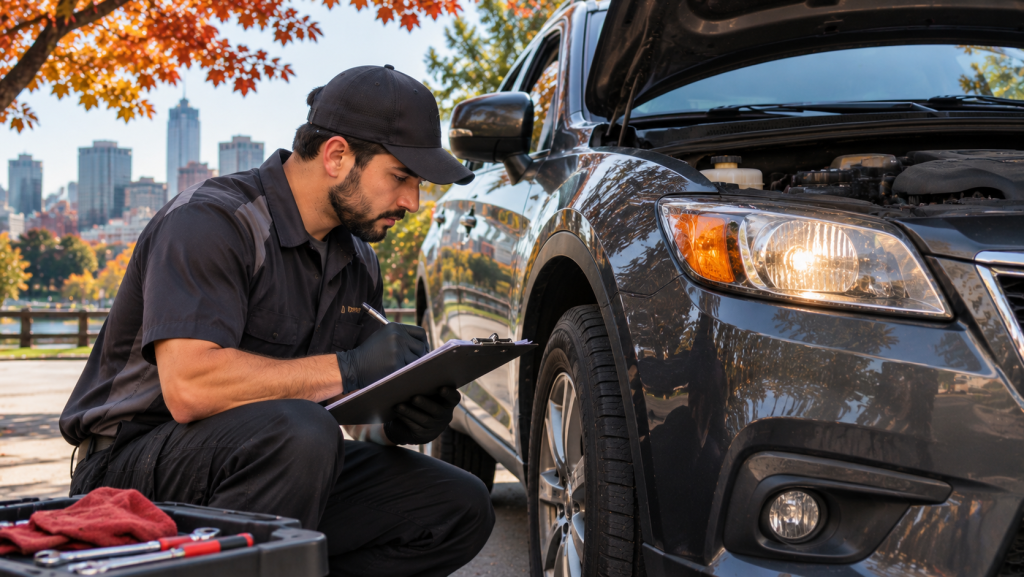
The easiest way to avoid a failed inspection is to find the problems before you go. A mobile mechanic can come to your home or workplace in Raleigh, do a pre inspection check of the lights, tires, brakes, wipers, horn, steering and exhaust, scan for codes and repair what they can on site, such as bulbs, wiper blades and some brake work. A failed inspection often comes down to repairs like these. Other repairs, such as certain exhaust work, major brake or steering repairs and emission system problems, may need a shop with a lift and specialized equipment. Note that the official inspection itself is done at a licensed inspection station, so a pre inspection check is a way to get ready, not a replacement for it. A good technician will tell you honestly what can be done where you are.
Quick Summary
- North Carolina requires annual safety inspections, and some counties also require emissions inspections. Check the NC DMV for current rules.
- Lights, tires, brakes, wipers, horn, steering, exhaust and emission parts are common trouble spots.
- A lit check engine light can cause an emissions failure.
- A ten minute pre inspection check can catch most easy problems.
- If the car fails, get the report, repair the items and return for a re inspection.
- Many pre inspection repairs can be done at your home, while some need a shop.
A little preparation can turn inspection day into a quick stop instead of a headache. If you would like help getting ready, visit the Mobile Mechanic Pros of Raleigh homepage to learn more, or contact us to schedule a visit.