Anyone who has lived in Raleigh for more than a few years has watched the same transformation unfold. What used to be a reasonably quick drive along I 40 toward Research Triangle Park or up Wake Forest Road now regularly takes considerably longer than it did even five years ago. Raleigh’s rapid population growth, driven largely by the ongoing expansion of the Research Triangle’s tech and research sector, has reshaped daily commutes across the metro, and this shift is quietly changing how often local vehicles actually need routine service compared to what drivers were used to not that long ago.
Why A Growing City Changes The Maintenance Math
Maintenance schedules are generally built around an assumption of how a vehicle will be driven, a mix of highway and city miles, a reasonable amount of stop and go traffic, and periods of steady cruising. As Raleigh’s traffic has grown denser over recent years, that underlying assumption has shifted for many local commuters without their maintenance habits necessarily catching up. A commute that used to be mostly steady highway driving five years ago may now include considerably more stop and go congestion, particularly around growth corridors like NC 540 or the increasingly built up stretches near RTP, even though the total distance covered has not changed much at all.
This matters because the type of driving, not just the distance, determines how quickly certain components wear down. A commute that has quietly shifted from mostly highway cruising to a mix that now includes meaningful stop and go traffic is putting more strain on brakes and transmissions than it used to, even if the driver has not changed their route or their daily mileage in any noticeable way.
What Wears Down Faster As Raleigh’s Traffic Grows
Brake pads are often the first component to reveal this shift, since every additional stretch of stop and go traffic added to a previously smoother commute means more frequent braking and more heat generated in the process. Drivers who have not changed their route in years may find themselves needing brake service more often than they used to, purely because the traffic conditions along that same route have become considerably denser over time.
Transmission fluid condition follows a similar pattern, since the added shifting demands of increased stop and go traffic accelerate fluid breakdown compared to the steadier highway driving a route may have offered in the past. Engine oil life, while generally tracked by mileage, can also be affected by this shift, since manufacturer guidelines classify stop and go traffic as severe driving, meaning oil change intervals that were once appropriate under the standard schedule may now call for the more frequent severe service interval instead.
Signs Your Maintenance Schedule Has Not Caught Up
A few signs suggest your vehicle may need attention sooner than your usual routine currently accounts for. Brake pads that feel thinner than expected during a checkup, a transmission that shifts less smoothly than it used to, or oil that looks noticeably dirty before your next scheduled change are all worth paying attention to. If you have experienced a starting issue that seemed to develop after a long stretch of increasingly congested commuting, our guide on the top 10 reasons your car won’t start and how to get back on the road covers a range of causes worth ruling out alongside these other wear patterns.
A fuel efficiency drop that does not have an obvious explanation is another subtle sign worth mentioning here, since a vehicle spending more time in stop and go conditions than it used to will naturally see its miles per gallon figure decline somewhat, even without any mechanical problem at all. Noticing this shift and connecting it to changing traffic patterns, rather than assuming something is wrong with the vehicle itself, can save you from chasing a phantom issue that is really just a reflection of Raleigh’s evolving commute.
Why Long Time Raleigh Residents Are Most Likely To Miss This Shift
Drivers who moved to Raleigh recently often set their maintenance expectations based on the traffic conditions they encounter from day one, which already reflect the city’s current growth. Longtime residents face a different challenge, since their mental model of their own commute may still be based on how traffic used to feel years ago, before the surrounding growth fully took hold. This gap between an outdated mental model and the actual current driving conditions is exactly why maintenance schedules quietly fall out of step, even for drivers who have not changed a single thing about their daily route.
This effect tends to be strongest for people who have lived along the same corridor for a decade or more, since the gradual, year over year nature of Raleigh’s growth means no single year ever feels dramatically different from the one before it. It is only when comparing today’s commute to how it felt five or ten years ago that the full scale of the change becomes obvious, and by then, a vehicle’s maintenance schedule may already be considerably out of step with what the current driving conditions actually demand.
Adjusting Your Routine To Match Raleigh’s Current Reality
Rather than relying on habits formed years ago, it makes sense to periodically reassess how your actual commute has changed and adjust maintenance frequency accordingly. Checking brakes every six months rather than annually is a reasonable adjustment for anyone whose route now includes meaningfully more congestion than it did in the past, while shifting to the severe service oil change interval makes sense for commutes that have quietly picked up more stop and go driving over time.
Why A Mobile Mechanic Fits Raleigh’s Growth Well
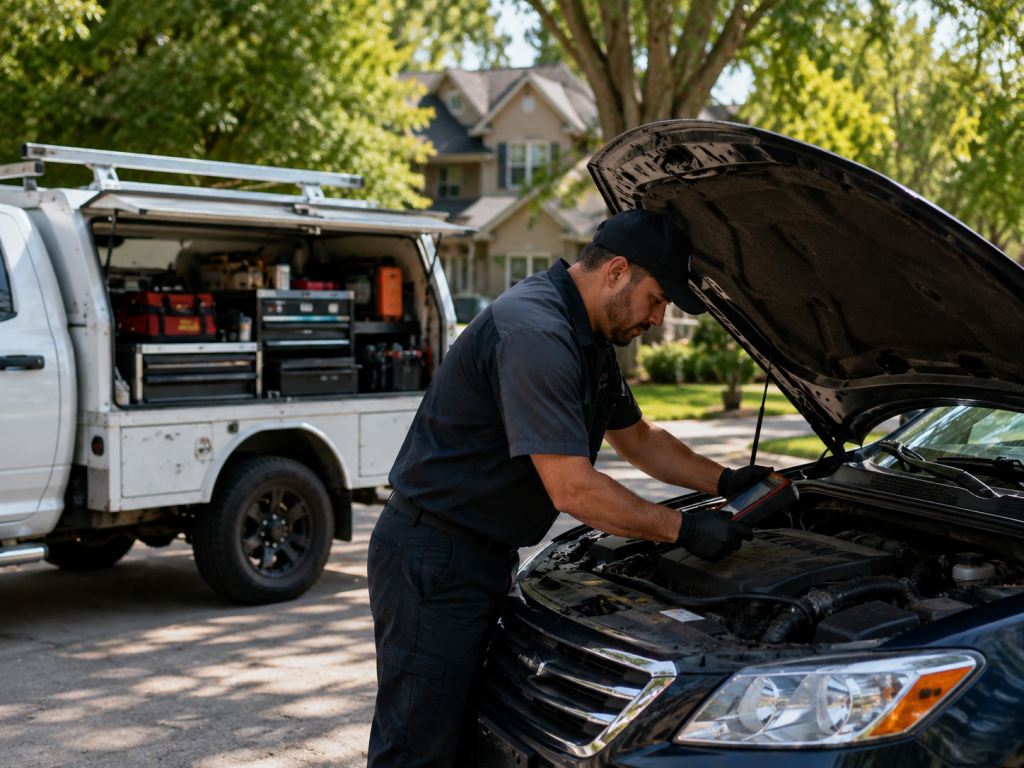
Given how much additional time Raleigh commuters are already losing to growing traffic, adding a separate trip to a repair shop is not appealing. A mobile mechanic can come to your home or office and handle brake inspections, transmission fluid checks, and oil changes without requiring you to navigate the same increasingly congested roads that created the extra wear in the first place.
We covered the broader advantages of this approach in our article on why mobile mechanics are better than traditional auto shops in Raleigh, which explains how convenience and flexible scheduling come together, particularly valuable for commuters adjusting to a city that keeps changing faster than their old maintenance habits ever accounted for.
Keep Your Maintenance Schedule Growing Along With Raleigh
Raleigh’s growth is not slowing down anytime soon, and the traffic changes that have already reshaped so many local commutes will likely continue for years to come. Reassessing your maintenance routine periodically, rather than assuming the schedule that worked five years ago still fits today’s reality, is one of the most effective ways to keep your car reliable as the city around it keeps changing.
If it has been a while since your vehicle had a proper inspection, visit our homepage to learn more about our services, or reach out through our contact us page to schedule a visit at your home or office at a time that fits your schedule.
A little extra attention now can help your car keep pace with everything Raleigh’s growth is quietly asking of it.